Study of 336 Accidents in Tree Operations: Risk Factors and Solutions
Arboriculture is an essential yet risky profession that demands heightened attention at every stage of work, whether pruning, cutting, or removing trees. Between 2022 and 2026, data from 336 accidents involving tree operations in the United States were collected through the reporting platform belonging to the TCIA (Tree Care Industry Association), available at www.accidentbriefs.tcia.org/ , for this article, providing valuable insights into the causes, risk factors, and potential solutions to mitigate these incidents. The Tree Care Industry Association (TCIA) is a United States trade association representing over 1,800 tree care companies, and aims to promote safety and education in the arboriculture sector. More information can be found at www.treecareindustryassociation.org/ .
Tree Operations in Brazil
This article is motivated by the need to understand and mitigate the risks associated with arboriculture operations. Analysis of accidents recorded in the United States offers insights that can be applied in global contexts, including Brazil, where tree pruning and removal operations also involve significant risks for workers. Although the Brazilian context has its particularities, such as specific labor legislation, climatic differences, and socioeconomic conditions, many of the identified risks are similar. It is essential that lessons learned in other countries be adapted and applied locally, promoting a safer and more efficient work environment for arboriculture professionals in Brazil.
Analysis of Accident Data: Severity and Causes
The accidents analyzed in the study varied in severity, from fatal incidents to minor occurrences. The classification was based on the following parameters:
Fatal Accidents: 220 cases ( 65.5% )
Serious Accidents: 63 cases ( 18.8% )
Accidents requiring rescue: 38 cases ( 11.3% )
Minor accidents: 9 cases ( 2.7% )
Featured Accidents: 4 cases ( 1.2% )
Accidents with Injuries: 2 cases ( 0.6% )
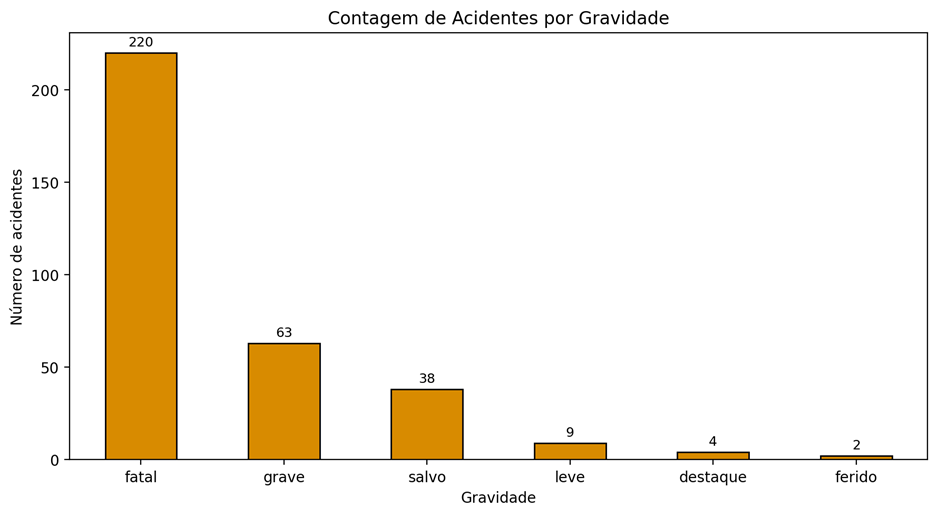
The high proportion of fatal accidents ( 65.5% ) highlights the dangerous nature of tree operations, where an operational error, a planning failure, or a problem with equipment can have devastating consequences. In the current classified database, 336 accidents were analyzed.
Main Causes of Accidents
Main Causes of Accidents
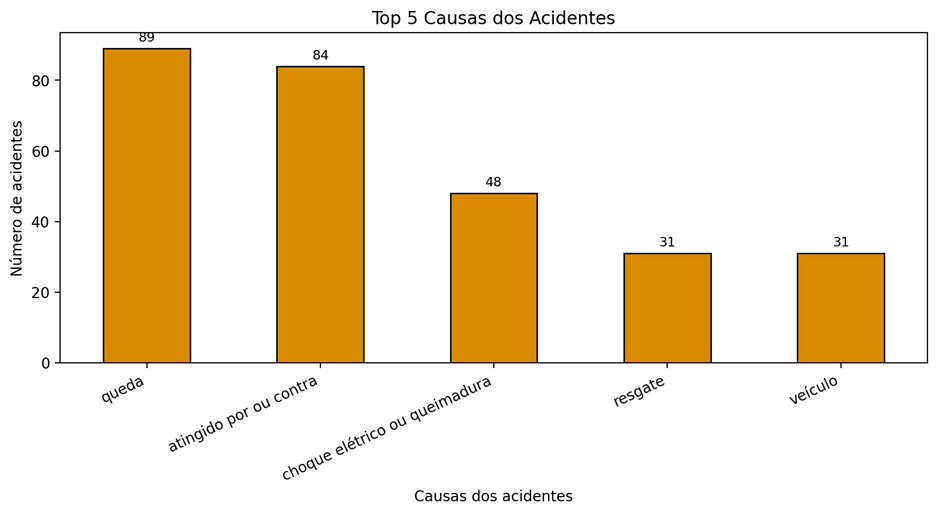
The accidents were classified according to their main causes, identifying the following risk factors:
Falls: 89 accidents ( 26.5% ) - Falls were the most frequent cause among the accidents analyzed, occurring mainly during tree climbing, the use of aerial work platforms, baskets, and other activities at height. These cases reinforce the importance of adequate anchoring systems, correct use of fall protection equipment, prior activity planning, and continuous team training.
Struck by or against an object: 84 accidents ( 25.0% ) - A significant portion of the accidents occurred when workers were struck by branches, trunks, cut sections of the tree, or other objects during pruning, cutting, or removal operations. These cases highlight the importance of controlling the fall zone, efficient communication among team members, and the consistent use of helmets and face shields.
Electric shock or burns: 48 accidents ( 14.3% ) - Working near power lines continues to represent one of the most critical and lethal risks. The lack of prior area analysis, definition of safe distances, and specific protocols for working near the electrical grid significantly contributes to this type of occurrence. To mitigate these accidents, it is essential that workers are trained to recognize electrical hazards and follow rigorous safety procedures.
Rescue: 31 accidents ( 9.2% ) - These records involve workers who needed to be rescued after becoming trapped, suspended, inverted, or incapacitated while working at height. The frequency of these cases demonstrates the need for practical training in rescue techniques, as well as well-defined emergency plans and teams prepared for rapid response.
Vehicle: 31 accidents ( 9.2% ) - Accidents involving trucks, platforms, mobile equipment, and other support vehicles also had a significant share. These events demonstrate the importance of safe machine operation, prior equipment inspection, overall stability, and proper isolation of the work area.
Trapped under something or crushed: 16 accidents ( 4.8% ) - In these cases, workers were trapped under trees, logs, branches, or structures during the movement, fall, or collapse of materials. This highlights the importance of safe handling techniques, correct reading of tree stresses, and clear coordination among team members.
Cutting: 14 accidents ( 4.2% ) - Accidents involving saws and other cutting tools continue to occur, generally associated with improper handling, operational errors, or lack of training. The correct use of tools, combined with technical training, is essential to reduce this risk.
Uncertain: 9 accidents ( 2.7% ) - Some accidents could not be precisely classified as to the main cause due to limited information available in the reports. This reinforces the need to improve the processes for recording, documenting, and investigating accidents.
Chipper/Chopper: 7 accidents ( 2.1% ) - Accidents involving branch chippers remain significant due to their high potential for severity. These cases require specific training, safe equipment feeding procedures, and rigorous attention to operation.
Insect bites: 4 accidents ( 1.2% ) - Incidents with bees and other insects occurred in smaller numbers, but remain a real risk in tree operations, especially pruning and removal.
Bites and stings: 2 incidents ( 0.6% ) - Cases involving animals, such as bats, were also identified, although infrequently.
No category defined: 1 accident ( 0.3% ) - One case could not be properly classified into the main categories available.
Workplace Violence: 1 accident ( 0.3% ) - There was also an isolated incident of violence in the workplace, indicating that safety should be considered not only from an operational perspective, but also in the context of relationships within the professional environment.
These data indicate that most accidents are concentrated in falls , being hit by objects or parts of the tree , and contact with electrical energy . Furthermore, rescue records and accident reports involving vehicles and mobile equipment show that the risk in arboriculture is not limited to the cutting itself, but involves the entire organization of the operation, planning, team communication, and emergency response.
The significant number of electrical accidents reinforces, in particular, the need for caution when working near energized infrastructure, while the high incidence of falls and impacts highlights the importance of technical training, work zone control, and the correct use of protective equipment.
Equipment as a Cause of Accidents
Equipment played an important role in the recorded accidents. In the current analysis of the reports, some equipment groups frequently appear as part of the operational context of the incidents.
Trucks and bucket trucks were mentioned in 101 reports . This equipment appears both in the transportation and support of operations and as part of the work-at-height structure itself. The reports show that operational failures, improper positioning, instability, and interaction with other elements of the construction site can significantly increase the risk.
Elevating platforms, lifts, and boom lifts were also mentioned in 101 reports . These devices are essential for reaching great heights, but they are associated with falls, electric shocks, rollovers, mechanical failures, and rescue situations. This reinforces the importance of prior inspection, correct positioning, base stability, and the proper use of safety systems.
Baskets appeared in 64 reports , generally linked to platforms, trucks with baskets, and operations near power lines. The recurrence of this equipment in the reports shows that working at height with a basket requires special attention to operation, maintenance, and worker protection.
Saws, chainsaws, and pole saws were identified in 62 reports . These tools continue to be present in many serious incidents, whether due to direct cutting, interaction with ropes, loss of control of the cut piece, or contact with electrical networks. Correct technical use and practical training are essential.
Ladders appeared in 33 reports , showing that they continue to be used in some operations, especially in initial access or support activities. Lack of stability, use on unsuitable surfaces, and the combination with other hazardous conditions can increase the likelihood of falls.
Branch chippers were mentioned in 25 reports . Even though they are fewer in number than other equipment, they still represent a high potential for serious accidents. The reports reinforce the importance of safe feeding procedures, continuous attention during operation, and rigorous control of the area around the equipment.
Ropes and rope systems appeared in 20 reports . Their relatively minor presence in the texts does not signify low relevance, but rather shows that they are typically associated with climbing, anchoring, belaying, controlled descent, and rescue. When they appear in accidents, they are usually linked to entanglement, configuration failures, cutting injuries, or the need for emergency worker extraction.
Tractors were mentioned in 16 reports , generally in support operations, dragging or moving trees and materials. These cases show the importance of correct operation and assessment of the forces applied during felling and removals.
Skid steers/loaders appeared in 12 reports , mainly associated with crushing, tree impact, or operator entrapment.
Harnesses also appeared in 12 reports , typically in incidents involving falls, inverted suspension, or rescues. This reinforces the importance of proper use, adjustment, compatibility with the system, and training in working at heights.
Cranes were mentioned in 6 reports , generally in complex lifting operations. Even though less frequently, they require a high level of planning, communication, and operational control.
These data show that equipment plays a significant role in the dynamics of accidents in arboriculture. However, rather than blaming the equipment in isolation, reports indicate that the risk often arises from a combination of equipment, operation, environment, positioning, team communication, and decision-making . Therefore, prevention depends not only on the equipment itself, but also on its inspection, maintenance, correct selection, and proper technical use.
Months of Accidents and Seasonality
The analysis of accidents by month shows relevant variations in the frequency of incidents throughout the currently evaluated period, from March 2022 to February 2026 , based on the most recent classification of TCIA Accident Briefs reports. These variations may be associated with seasonal factors, weather conditions, higher demand for services, and increased operational exposure during certain periods. The monthly averages calculated on the current basis were as follows:

January: 6.25 accidents
February: 6.75 accidents
March: 7.5 accidents
April: 7 accidents
May: 8 accidents
June: 6.6 accidents
July: 9 accidents
August: 8.25 accidents
September: 8 accidents
October: 5.75 accidents
November: 7 accidents
December: 7.33 accidents
Increased Activity During Peak Periods
The data shows that the months with the highest average number of accidents were July (9.00) , August (8.25) , May (8.00) , and September (8.00) . These were followed by March (7.50) and December (7.33) . This pattern suggests a higher concentration of occurrences during periods of more intense activity, when services such as pruning, removal, maintenance of green areas, and response to weather events increase.
In the United States, the warmer months and seasonal transition periods often favor outdoor work, increasing the volume of operations involving trees. This also increases workers' exposure to risks such as falls, impacts from branches and trunks, contact with electricity, and the use of potentially dangerous equipment.
Other factors that may contribute to the increase in accidents during peak working periods include:
Extreme weather conditions: storms, strong winds, hurricanes, and other severe events generate urgent demand for tree removal and emergency services, which can increase operational risk.
Increased use of hazardous equipment: during peak activity periods, there is more frequent use of chainsaws, branch chippers, aerial work platforms, and bucket trucks, requiring rigorous training and control.
Increased operational workload: the greater the volume of work, the greater the team's exposure tends to be to critical tasks, travel, pressure for productivity, and simultaneous operations.
The need for continuous training: periods of increased activity demand even greater operational discipline, planning, team communication, and preparedness for emergencies and rescues.
These data reinforce the importance of careful planning and continuous training, especially during periods of higher activity, to reduce risks and promote safer operations in arboriculture.
Word Cloud: A Detailed Look at Accidents
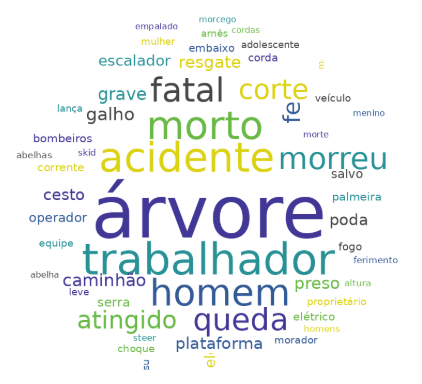
The word cloud analysis highlights critical areas that need to be addressed to make tree operations safer. The predominance of terms related to fatality, falling, impact from tree parts, cutting, rescue, and electrocution shows that the most frequent risks are not restricted to a single moment of the activity, but are distributed throughout the entire operation. This includes access to the tree, team positioning, equipment use, work zone control, interaction with the electrical grid, and emergency response.
At the same time, the cloud also helps reinforce an important perception: safety in arboriculture depends on a set of factors that need to work in harmony. It's not enough to have good equipment if there's a lack of planning, communication, and technique. Similarly, it's not enough to master the cutting technique if the operation doesn't correctly consider the risk of falling, the tree's behavior, the movement of parts, the proximity of power lines, or the need for rescue.
Reports repeatedly show that the most serious accidents often occur precisely when there is a failure in the integration between technical knowledge, team organization, and operational control.
Therefore, reducing accidents in tree operations requires a practical and continuous approach to prevention. This involves frequent training, equipment inspection and maintenance, careful assessment of the tree and the environment, clear definition of roles within the team, correct use of protection systems, and real preparedness for emergency situations.
In a sector where falls, impacts, electric shocks, and operational failures can have fatal consequences, prevention cannot be treated as a detail, but as a central part of the job.
With all this in mind, it becomes clear that arboriculture operations require much more than practical skill. They demand technical preparation, constant attention, risk assessment, operational discipline, and a commitment to safety at every stage of the activity.
Each reported accident, whether a fall, an electric shock, an impact from a branch, or a rescue situation, reinforces the need to continuously evolve the sector's practices.
Ultimately, working with trees means dealing with a dynamic environment where small mistakes can have severe consequences. Therefore, the combination of knowledge, planning, correct use of equipment, and sound decision-making is what sustains a well-executed operation.
The goal remains simple, but it demands seriousness every day: climb with technique, perform the work with control, and descend safely.

Felipe Silveira
ISA Certified Arborist - No. BR-0024A
Tree Climber Specialist TCIA
Two-stroke engine mechanic
Postgraduate in Urban Arboriculture from UFRRJ
Arborist for the Husqvarna Brazil Team
BLS Certified
Climbing Equipment Inspector
Occupational Safety Technician